What Happens If One Spouse Refuses to Sign Divorce Settlement Documents?
People often worry that a spouse who digs in their heels can stall a divorce forever. In reality, no one can block the process indefinitely. Courts treat divorce as a legal right, and they have tools to move things forward even without full cooperation.
The Basic Process
Most states, including Illinois, follow a no-fault divorce system today. This means you don't need your spouse's agreement to end the marriage. You file a petition, serve documents, and aim for a response within a set period, usually 20 to 30 days (30 days in Illinois, or 60 if served out of state). If your spouse signs and agrees, the case wraps up quickly through an uncontested divorce. Refusal shifts it to contested territory, but it still progresses.
The signature on the response or settlement documents shows consent to terms like property division, alimony, or child custody. Without it, the court assumes disagreement. If they miss the response window, you can request a default judgment, and the judge decides based on your evidence alone.
Court Steps to Resolve Stalls
When one spouse refuses to cooperate, the judge steps in to break the stalemate. This can typically begin with a case management conference, where deadlines are set and the court encourages settlement talks. If those fail, discovery follows. Both sides exchange financial documents, tax returns, and sworn depositions. This phase often forces reluctant spouses to yield, since hiding assets or lying under oath risks sanctions, contempt rulings, or harsher penalties.
Mediation often comes next, particularly in counties that require it. A neutral mediator works with both sides to negotiate terms on property, support, or custody. If no agreement is reached, the court holds hearings on specific disputes, and a trial brings the process to an end with the judge's final decree.
Timeline and Costs
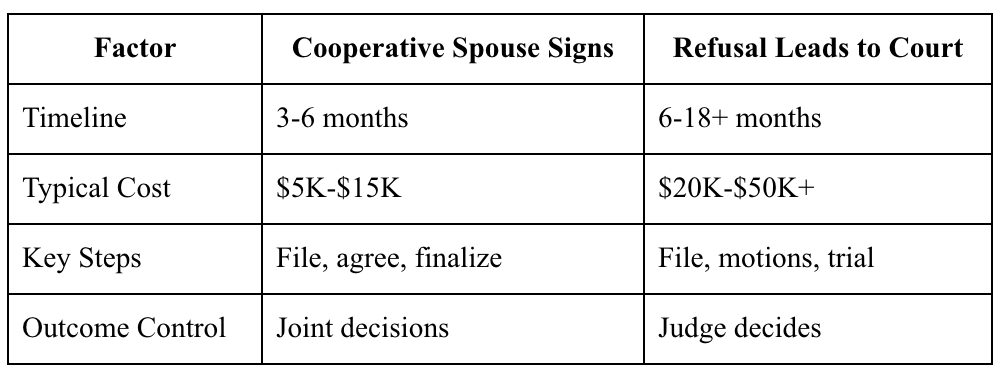
Refusal to sign is frustrating because what could be a simple case ends up dragging everything out, often adding months or even a year due to court backlogs and mounting disputes. Fees pile up fast too, with attorney time on filings and prep, plus experts for asset valuations if kids or businesses are involved. Plan for extra costs upfront.
Practical Tips Before Filing
Prepare ahead to smooth the process. Document everything early with bank statements, tax returns, and property deeds. Discuss service options with your attorney since evasion can stall summons. Test the waters with a separation agreement first. If abuse or safety concerns arise, file for protective orders alongside the divorce. In the end, if you want the marriage to end, Illinois law protects your right to dissolve it, even if your spouse refuses to cooperate. Cooperation cuts time and costs, but no one can take away your right to a divorce.