How Divorce Affects Your Taxes (2026 Update)
Many of my clients worry how divorce will hit their taxes. The process reshapes your tax picture in ways that catch people off guard without preparation. Federal rules drive most changes, and Illinois follows suit closely. Here's what counts for 2026 filings.
Filing Status After Divorce
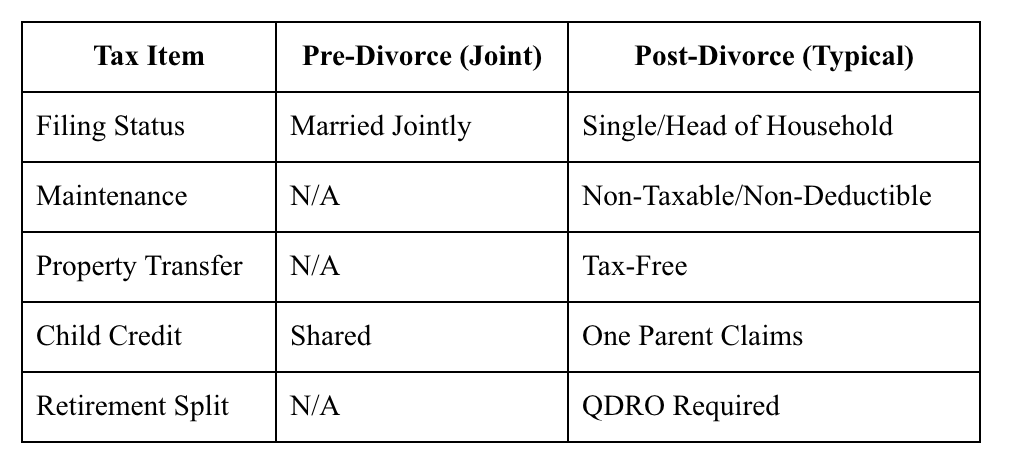
Your filing status depends on your marital status on December 31. Finalize the divorce before year-end, and both spouses file as single or head of household (if you cover over half the costs for a home with a qualifying child). Still legally married that day? You can file married filing jointly or married filing separately.
Joint filing often lowers your tax bill but carries shared liability for any errors or audits. For this reason, many couples switch to filing separately once divorce proceedings start, to limit personal risk.
Tax Implications of Support Payments and Property Transfers
Post-2018 divorces, including those in Illinois, follow the Tax Cuts and Jobs Act rules. Maintenance (alimony) payments create no taxable income for the recipient and offer no deduction for the payer. Child support remains fully tax-neutral under both federal and Illinois law.
Property division works the same way. Illinois requires equitable splits, not equal ones. Transfers of assets between spouses during divorce incur no federal capital gains or income taxes at the time. You only face taxes later if you sell, based on your original cost basis. Cash settlements stay tax-free upon transfer.
Retirement accounts need special handling. A Qualified Domestic Relations Order (QDRO), approved by the court, allows tax-free transfers of 401(k)s, pensions, or similar plans to your ex without early withdrawal penalties. Without it, accessing funds before age 59½ triggers income taxes plus a 10% penalty. IRAs use comparable transfer orders. Address these in your settlement to sidestep unexpected bills.
Claiming Dependents and Credits
Only one parent can claim a child as a dependent each year. The custodial parent typically takes the dependency exemption, child tax credit, and head of household filing status. A non-custodial parent can claim these benefits if the divorce decree or IRS Form 8332 specifies it, which often happens on an alternating-year basis.
Credits like the Earned Income Tax Credit and Child and Dependent Care Credit also depend on custody time and who provides the child's home. Agree on this clearly in your settlement agreement to make the most of available tax benefits.
Illinois State Taxes After Divorce
In Illinois, state tax treatment generally follows the federal rules for filing status, alimony, and child support. Transfers of property between spouses as part of a divorce are not taxed by the state. However, Illinois calculates state income tax starting with your federal adjusted gross income, so any changes at the federal level will affect your state return. For 2026, Illinois applies a flat 4.95% income tax rate.
Planning Ahead for Divorce Tax Filing
Before you sign anything, review the numbers with your CPA. Look at how different filing statuses and support arrangements will affect your taxes. Include clear tax provisions in the marital settlement agreement so both sides know how items will be reported. If the case involves a business, equity compensation, or stock options, have them valued with tax basis in mind. Taking care of these details early makes tax season much easier and helps you keep more of what you’re dividing.